


Optimising Machine Stretch Film Selection: A Technical Guide to doing it the right way
To optimise load containment and minimise material and financial costs, we audit eight core mechanical and structural variables before we can advise which machine stretchfilm would suit your operation. Our range is vast but it’s vital to get it right to protect your products, business and your operators.
Choosing the correct machine stretch film is a precise engineering calculation. If film elasticity parameters do not match your wrapper’s mechanical settings, the film will either snap during application or continue to elongate in transit. This secondary elongation causes pallets to displace in transit
Mechanical Variables: Machinery & Kinematics
Your wrapping machinery dictates the required polymer blend and tensile performance of your film.
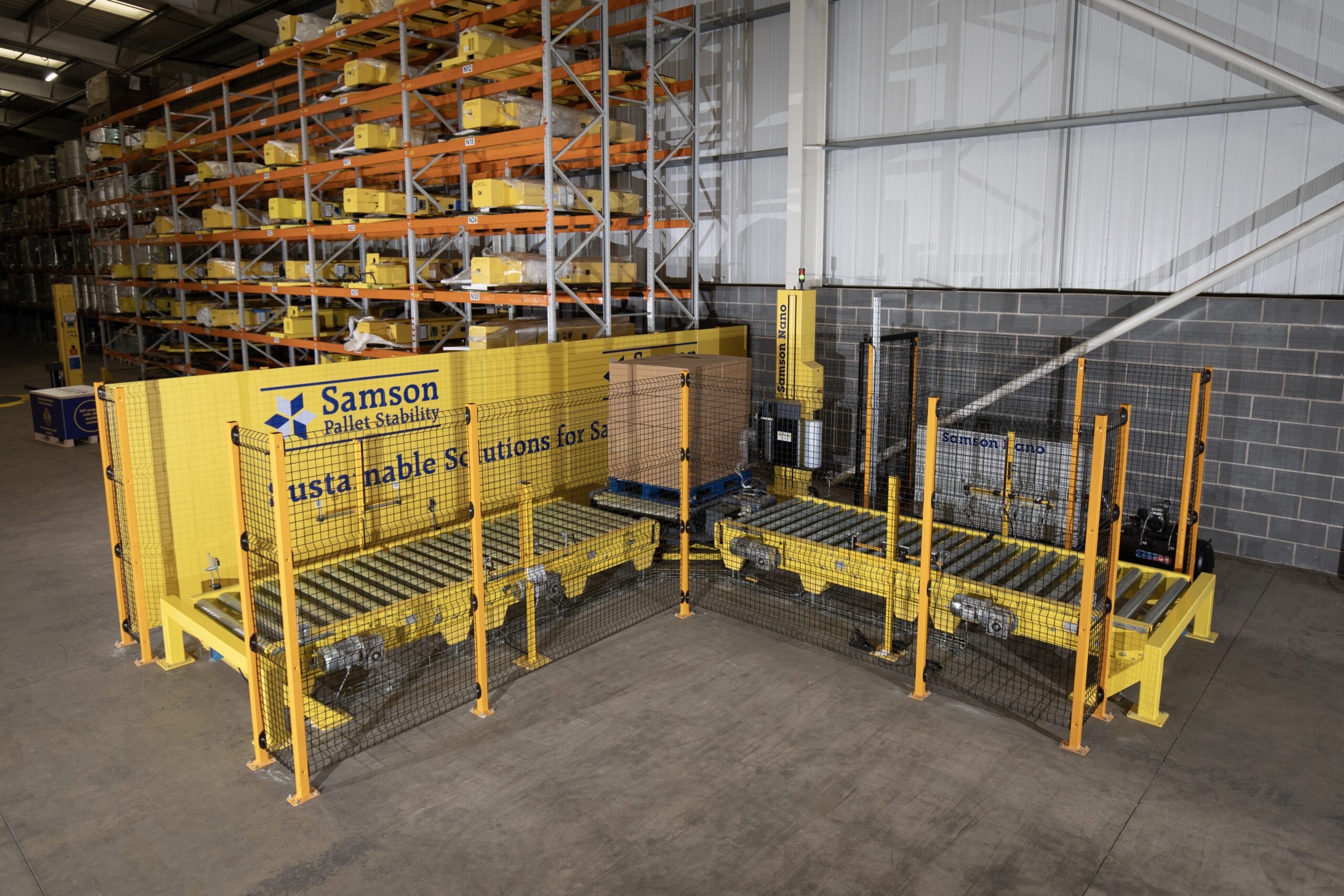
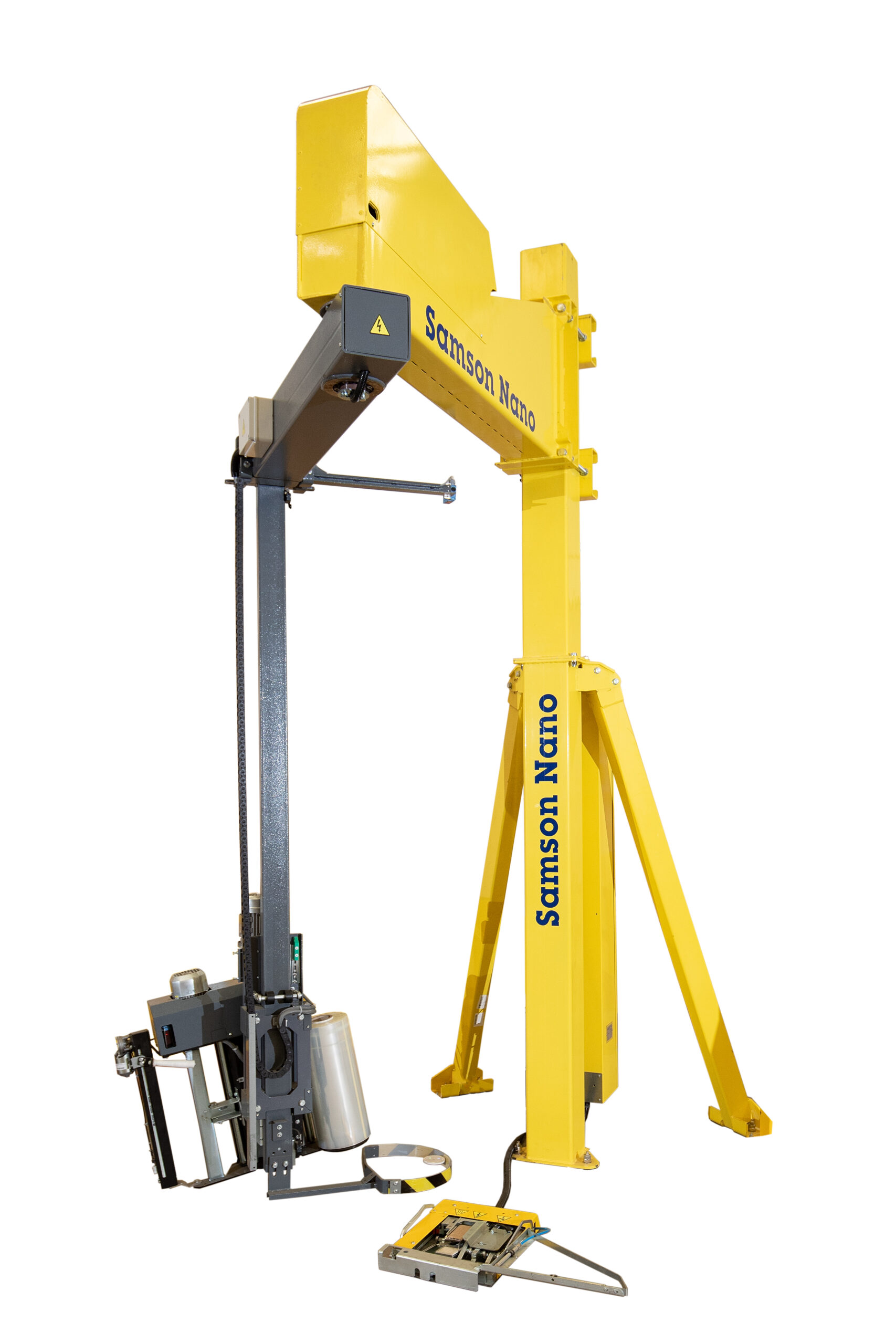
- Pre-Stretch Mechanism & Gear Ratios: Film yield points must match your carriage type. Fixed-gear systems apply rigid, preset stretch percentages. Motorised, variable-speed carriages can stretch high-performance films from 150% to over 400%. Forcing a low-parameter film into a high-stretch carriage causes immediate snapping.
- Automation Level: Fully automatic conveyor lines demand highly uniform film rolls with zero defects. Minor gauge variations that a semi-automatic turntable handles easily can cause line stoppages and automated system faults.
- Unwind Velocity & RPM: High-speed, high-RPM rotating arms or ring wrappers subject film to intense acceleration forces. If the film lacks high puncture propagation resistance, rapid unwind speeds will snap lower-grade materials instantly, regardless of thickness.
Load & Logistics Variables: Structural Profiles
The physical geometry of your pallet and its transport conditions determine the minimum required holding force.
- Pallet Profile Geometry: Symmetrical, flush edges (A-loads) require standard film. Irregular shapes with sharp corners, overhangs, or jagged protrusions (B/C-loads) demand high puncture resistance to prevent structural zipping.
- Product Type: Product mass dictates the required containment force. Heavy, dense products (metals, liquids) require high elastic retention, whereas soft, crushable goods require low-tension films with high elastic memory.
- The Transit Cycle: Long-haul shipping, intermodal transfers, and rough distribution networks subject pallets to continuous multi-directional G-forces, accelerating dynamic shifting if the film suffers from elastic deformation.
The Real-life Transit Solution: The Samson Testing Lab
Theoretical data sheets cannot guarantee transit safety. The only reliable way to validate pallet stability and eliminate transit damage is through empirical, scientific stress-testing.
At our dedicated testing laboratory in Sheffield, Samson Pallet Stability (part of the Samuel Grant Group, with over 135 years of industrial packaging expertise) eliminates the guesswork from your packaging lines.
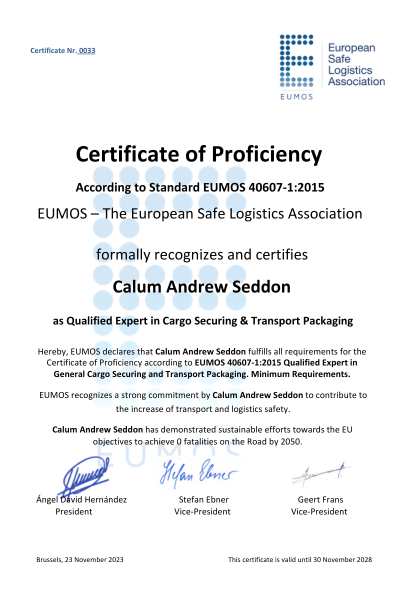
Using our advanced Slingshot Testing, we subject your exact pallet configurations and film trials to real-world dynamic transit forces up to 0.8G. This testing process ensures your shipments achieve strict EUMOS 40509 compliance, validating your load containment strategy before your products ever leave the warehouse floor.
Material Science Variables: Film Composition and Performance
Selecting the right film structure balances load-holding force with environmental and regulatory compliance.
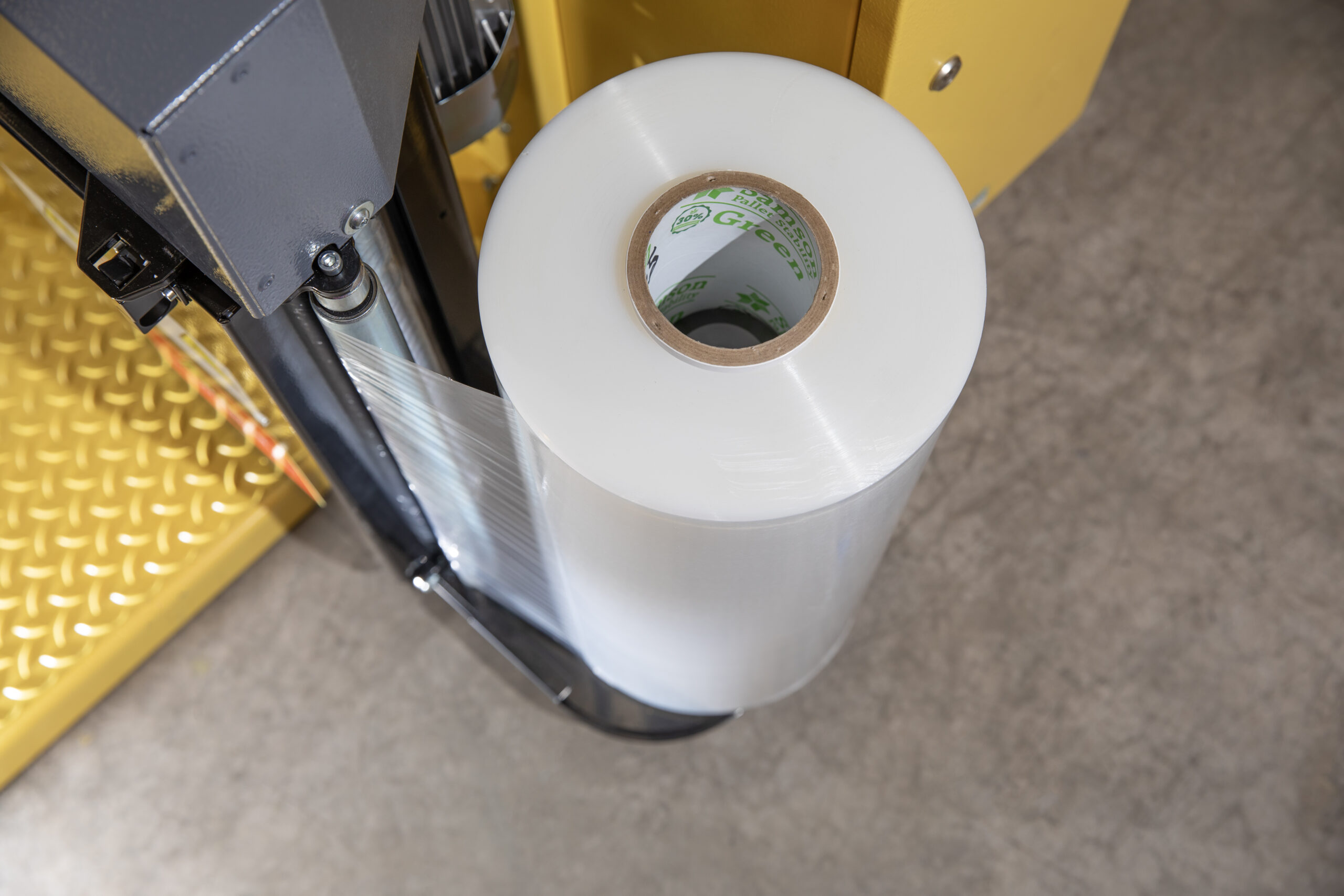
- Thickness of film; (8mu to 35mu): Down-gauging to ultra-thin multi-layer nano-films (8mu–12mu) reduces material consumption but requires high-tech, precise machinery. Heavy, industrial, or unstable loads frequently require heavy-gauge films (up to 35mu) to deliver sufficient compressive force.
- Sustainability & Polymer Origin: Regulatory and corporate targets dictate your raw material strategy:
-
- Virgin Polymers: Provide maximum, predictable performance metrics and ultimate clarity.
- Post-Consumer Recycled (PCR) Content: 30% or 50% PCR formulations support sustainability goals but stretch capabilities, also reducing tensile and tear characteristics.
- PaperWrap Solutions: Ideal for plastic-free applications.