


How often does your QA team audit incoming strapping materials? Tensile testing is the only way to validate safety margins and ensure load stability.
🔬 Material Verification: Why Lab Testing will always trump PET Strapping Datasheets
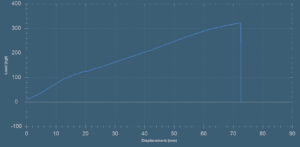
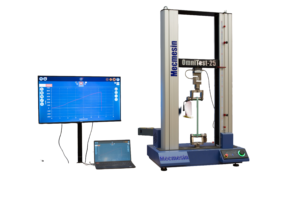
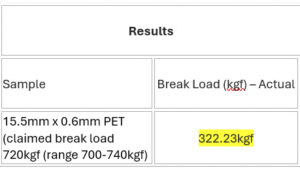
We recently conducted a destructive tensile test on a batch of 15.5mm x 0.6mm Polyester (PET) strapping from a new customer.
According to the supplier’s technical data sheet they had been given, the material specified a nominal break load of 720 kg. However, during tensile testing, the strap reached ultimate tensile strength and suffered catastrophic failure at just 322 kg.
For high-load bundling, timber securing, or logistics strapping, a deviation this severely compromises load containment. It directly risks joint efficiency failure and structural shifts during transit.
Our Technical Assessment: Relying solely on a supplier’s DataSheet without scientific verification is a major risk for high-stress applications as material integrity cannot be assumed.